
Nexus Seek
Searches and synthesizes information from academic papers, news, and reports to provide comprehensive research summaries.
Are you the owner?
Claim this tool to publish updates, news and respond to users.
Sign in to claim ownership
Sign InDescription
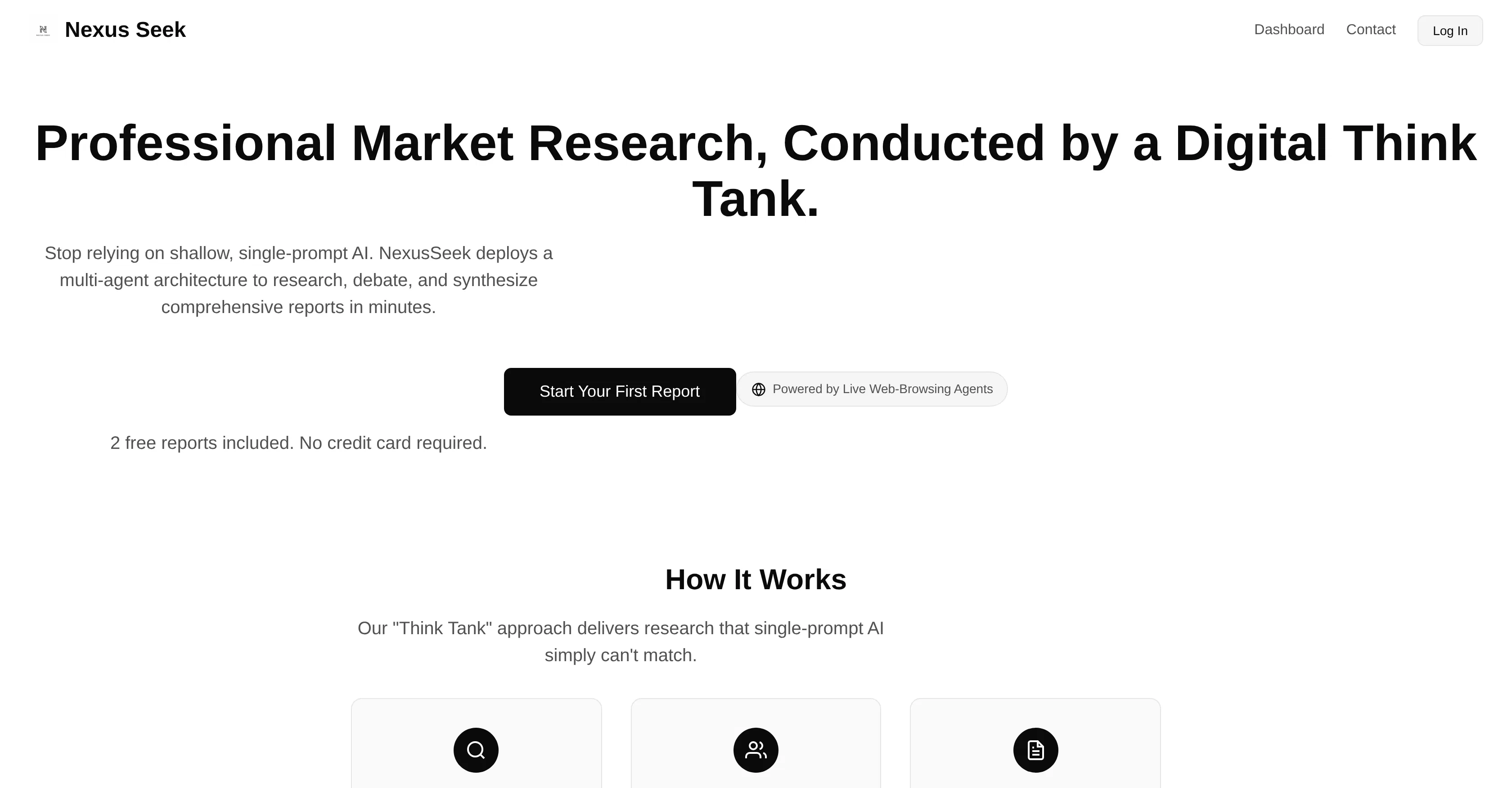
Nexus Seek is an AI-powered research assistant designed to streamline the process of gathering and understanding information from diverse sources. It helps users quickly find relevant data across academic papers, credible news outlets, and industry reports, presenting it in a synthesized and digestible format. The primary value lies in its ability to save researchers, analysts, and professionals significant time by automating the initial stages of literature review and market analysis, turning scattered information into actionable insights.
Key features: The tool can perform deep semantic searches across multiple databases simultaneously, not just keyword matching. It generates structured summaries that highlight key findings, methodologies, and data points from the sourced materials. Users can ask follow-up questions in natural language to drill down into specific aspects of the research. It also provides citation trails and source credibility indicators, and can create visual knowledge graphs to show connections between different concepts and papers.
What makes Nexus Seek unique is its focus on synthesis over simple aggregation. It doesn't just list sources; it interprets and connects information from them to form a coherent narrative. Technically, it leverages advanced language models fine-tuned for academic and technical comprehension. It operates primarily as a web application with a clean, intuitive interface, and offers browser extensions for direct research from articles. While it integrates with reference managers like Zotero, its core strength is as a standalone discovery and synthesis platform.
Ideal for academic researchers conducting literature reviews, market analysts tracking industry trends, and content creators needing well-sourced background information. Specific use cases include a student quickly grasping the current state of a scientific field, a consultant preparing a competitor analysis report, or a journalist verifying facts and gathering context for a complex story, all accomplished without manually sifting through hundreds of search results.